How to read our invoice using the overview and breakdown tab.
The default view for invoices is by employee and is the view users can see in the “Overview” section within the Invoices tab in the portal.
The Overview section of the invoice shows how many subscribers are enrolled, which coverage tier they’re in, and how those enrollments translate into dollars owed for the month. Each row represents a specific fee type (for example, Aggregate Factor, DPC Fee, Inpatient/Outpatient UM, Network Fees, PBM, TPA, Premium), and each column represents a coverage tier (EE = employee only, ES = employee + spouse, EC = employee + child(ren), EF = employee + family).
For every fee and tier, the invoice displays the number of enrolled subscribers, the per‑subscriber monthly amount, and the resulting extended total for that line. These line items roll up into two high‑level buckets at the top right of the invoice: Reserves, which are the dollars set aside in the claims fund to pay claims, and Fixed Costs, which are the administrative and vendor fees we pay out on your behalf (e.g., TPA, stop loss, network, and care management partners). The Total on the invoice is simply the sum of Reserves and Fixed Costs, representing the total amount we will pull for that billing period.
Invoices change from month to month based on eligibility and sometimes changes will occur mid-month, where coverage for members is either added or removed for a given month after the employer has already been invoiced. These are represented as +X and -X on an invoice breakdown, where +X represents an additional coverage added during the previous month and -X represents a coverage removed during the previous month.
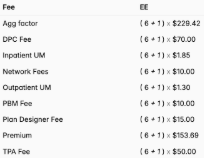
Coverage adjustments made mid-month for a member may be for multiple months of coverage changes. For example, if a plan had an EE with coverage that was not accounted for the past 3 months, an adjustment for that will be +3 under the EE column for every fee they are assigned.
Below are three typical invoice scenarios.
No change in eligibility
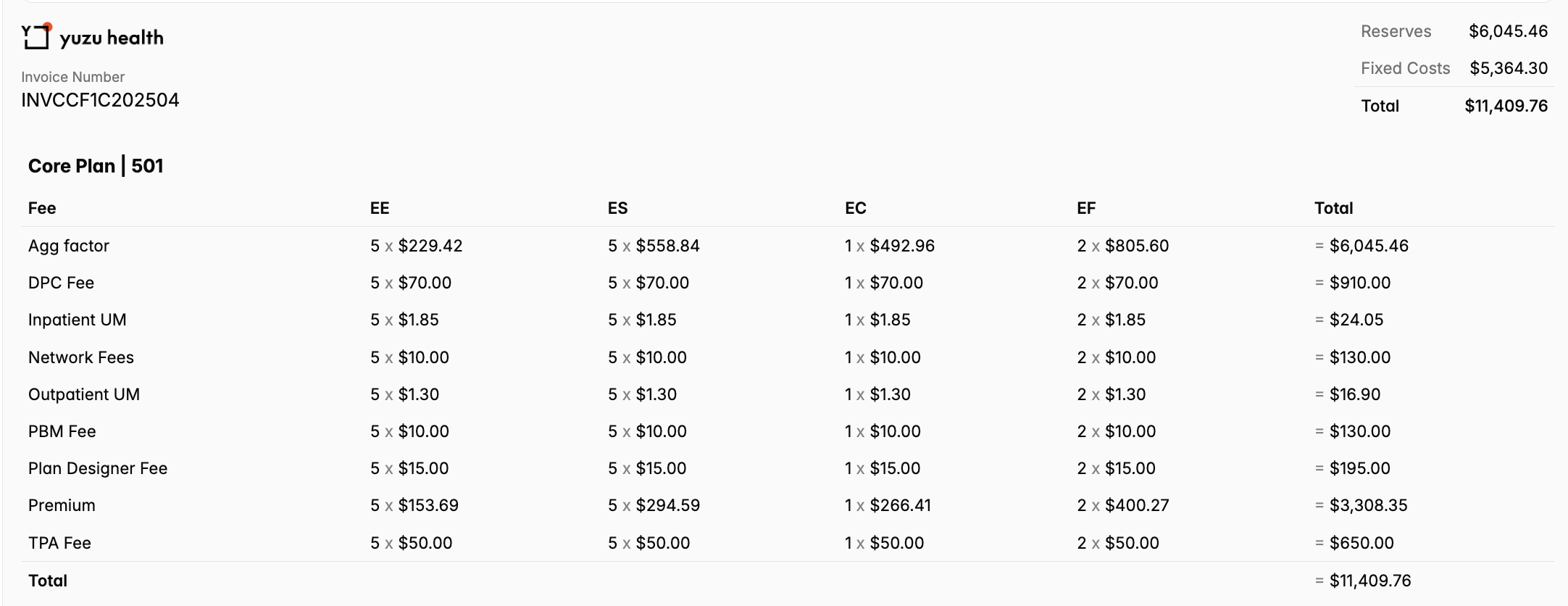
- Standard invoice, payment pulled and vendors paid. Our invoice provides visibility into each line item and the number of subscribers / employees by tier.
- In the invoice below there are 13 total subscribers / employees. Broken down by tier:
- 5 EE, just subscriber on the plan.
- 5 ES, subscriber and spouse on the plan.
- 1 EC, subscriber and dependent.
- 2 EF, subscriber, spouse, and dependent.
- In the invoice below there are 13 total subscribers / employees. Broken down by tier:
- ‘Reserves’ is the money remains in the claims fund while ‘Fixed Costs’ are fees paid out to vendors on the second of the month.
- For this example, this is the invoice for the month of April.
Member added to the plan with retroactive charges
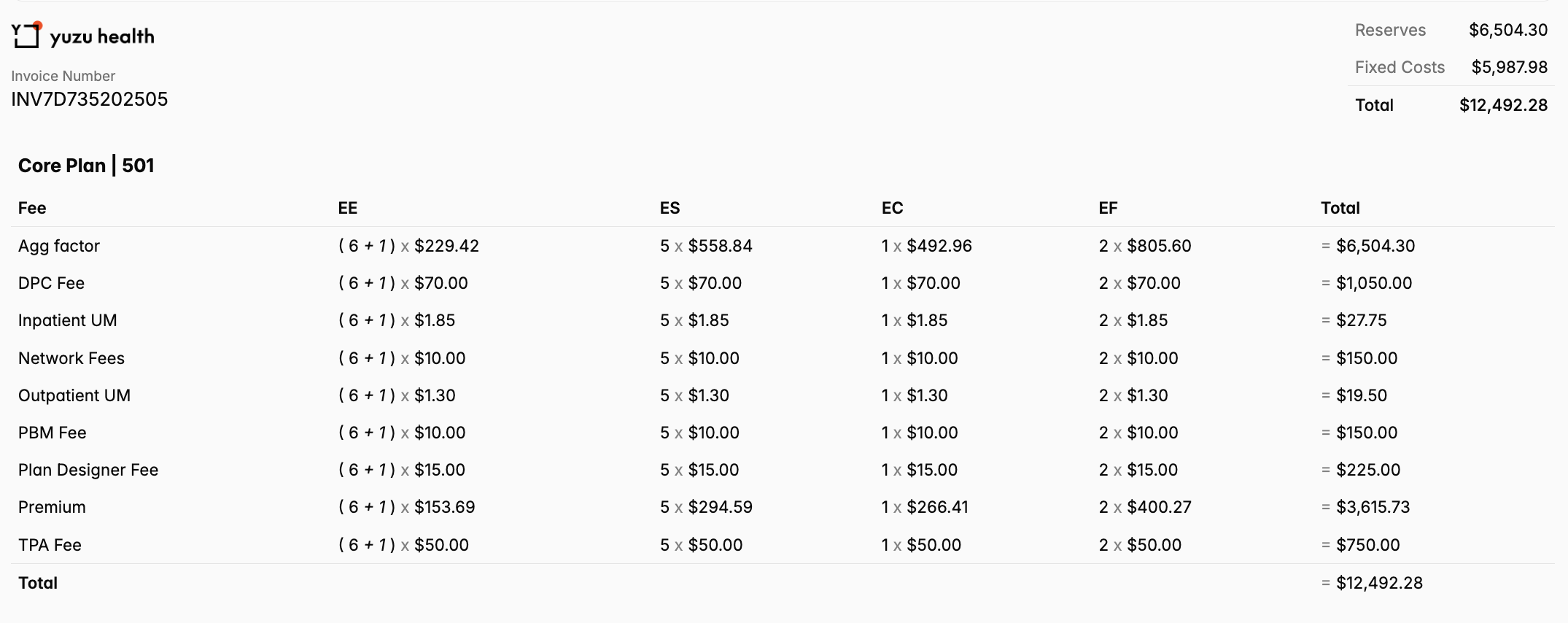
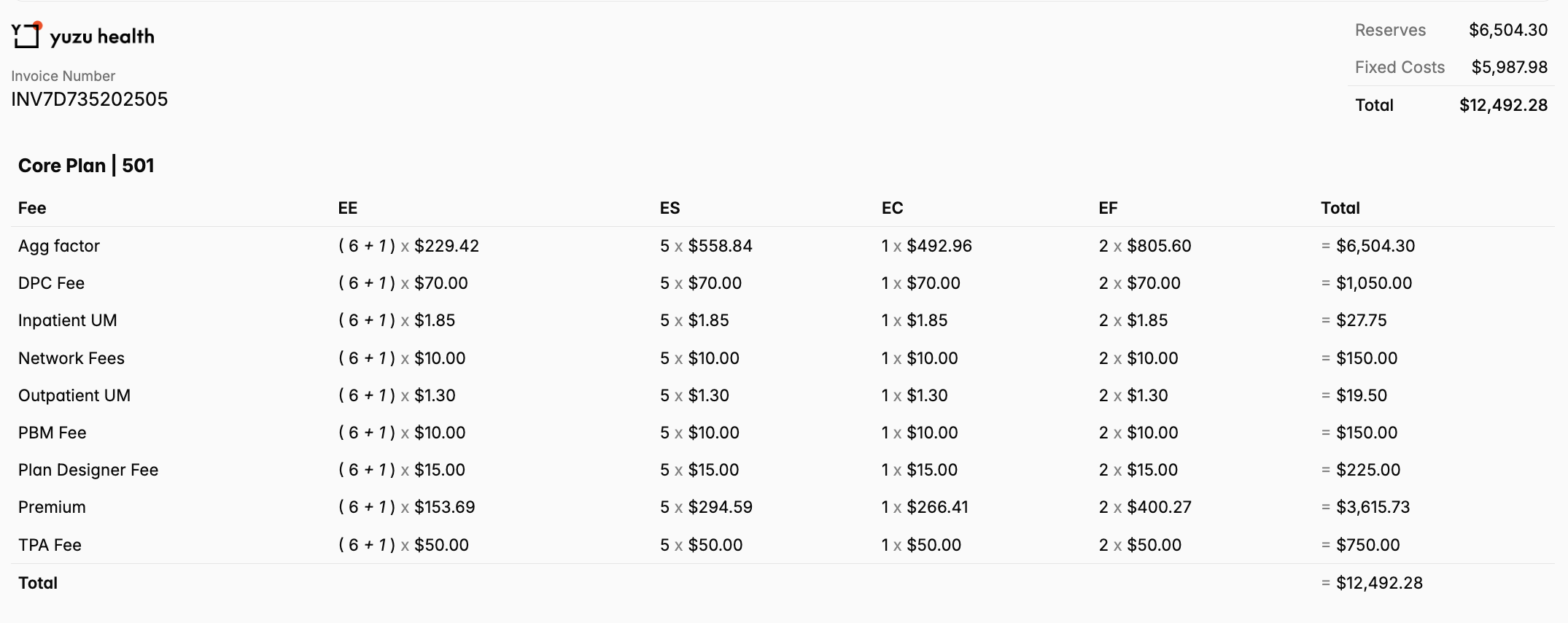
- Scenario: In mid-April, a member was added to the plan and their coverage began immediately. Below is the invoice for May.
- A member added to the plan increases the enrollment in the tier for May’s invoice (i.e., in the invoice below, the EE tier is now 6, up from 5 EEs in the previous period).
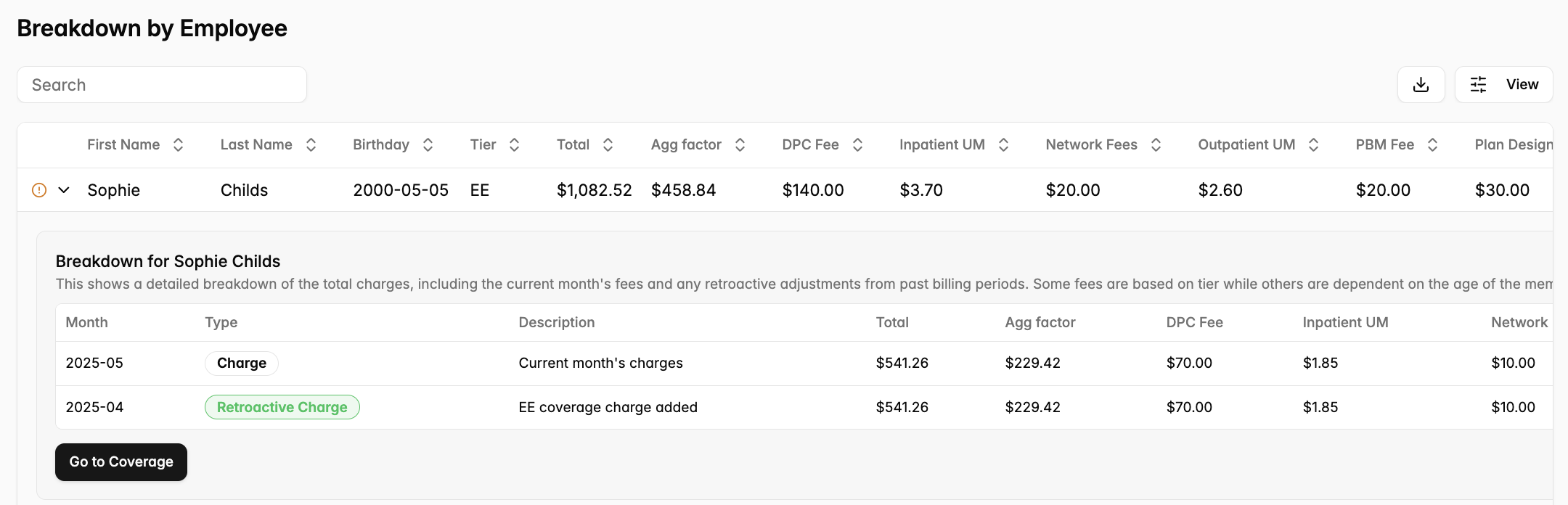
- But because the member was added to the plan mid-month, we retroactively invoice, pull, and pay the full monthly total for April in the month of May.
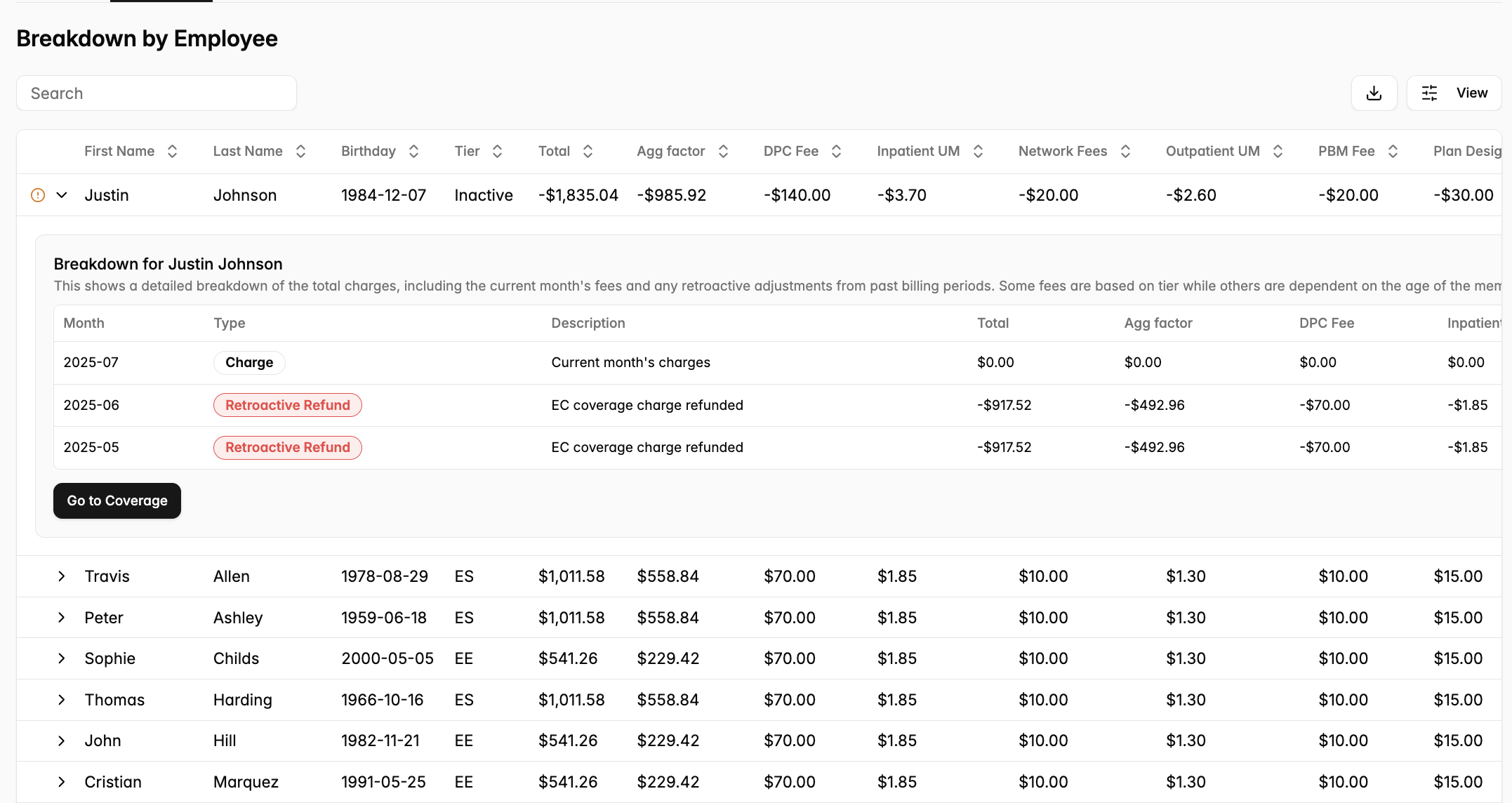
- In the invoice this is shown by the (+1) in the EE tier; more detail is visible on the ‘Breakdown’ tab
Other examples of how a (+1 or +2, etc.) could appear on an invoice include:
- A DPC had a member enrolled for two months and retroactively charging for their membership fees in the most recent invoice
- Coverage changed from mid-month from ES to EE, changing the total pulled and paid in the most recent months invoice
Member was retroactively terminated from the plan
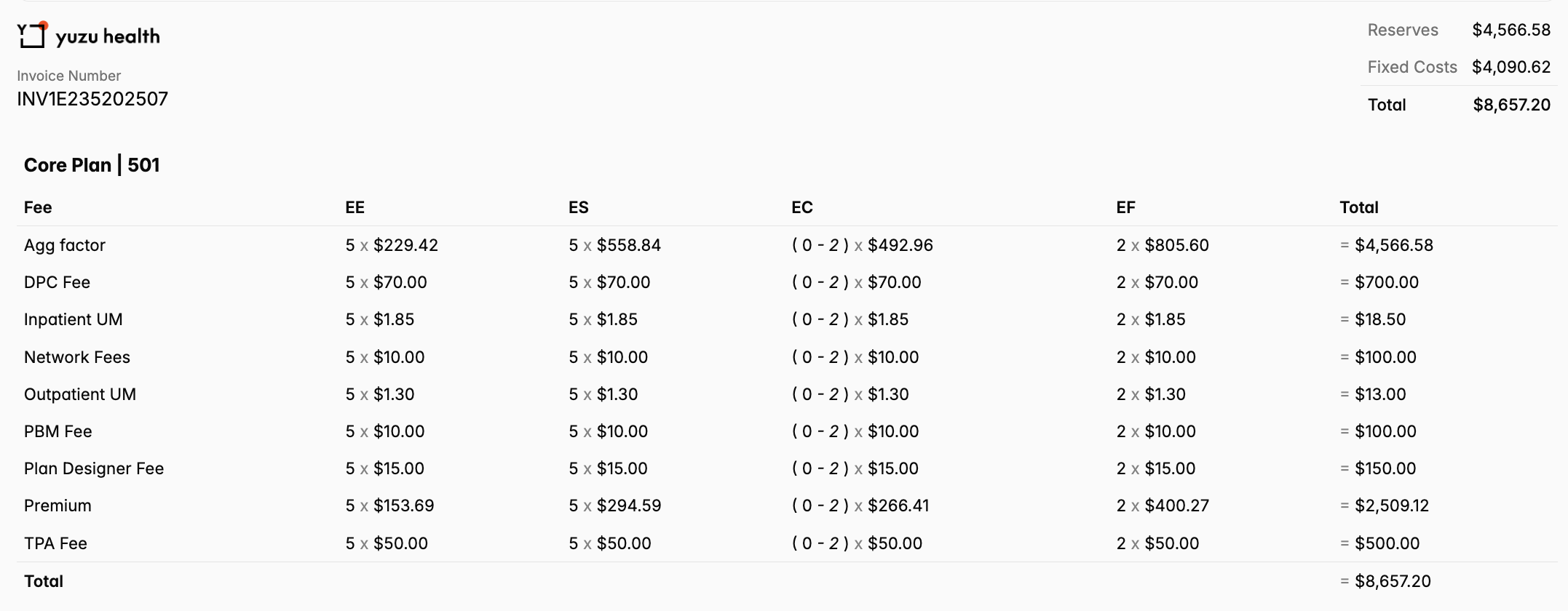
- Scenario: In the June invoice, a member who should not have been active on the plan for the past two months was officially terminated in the portal.
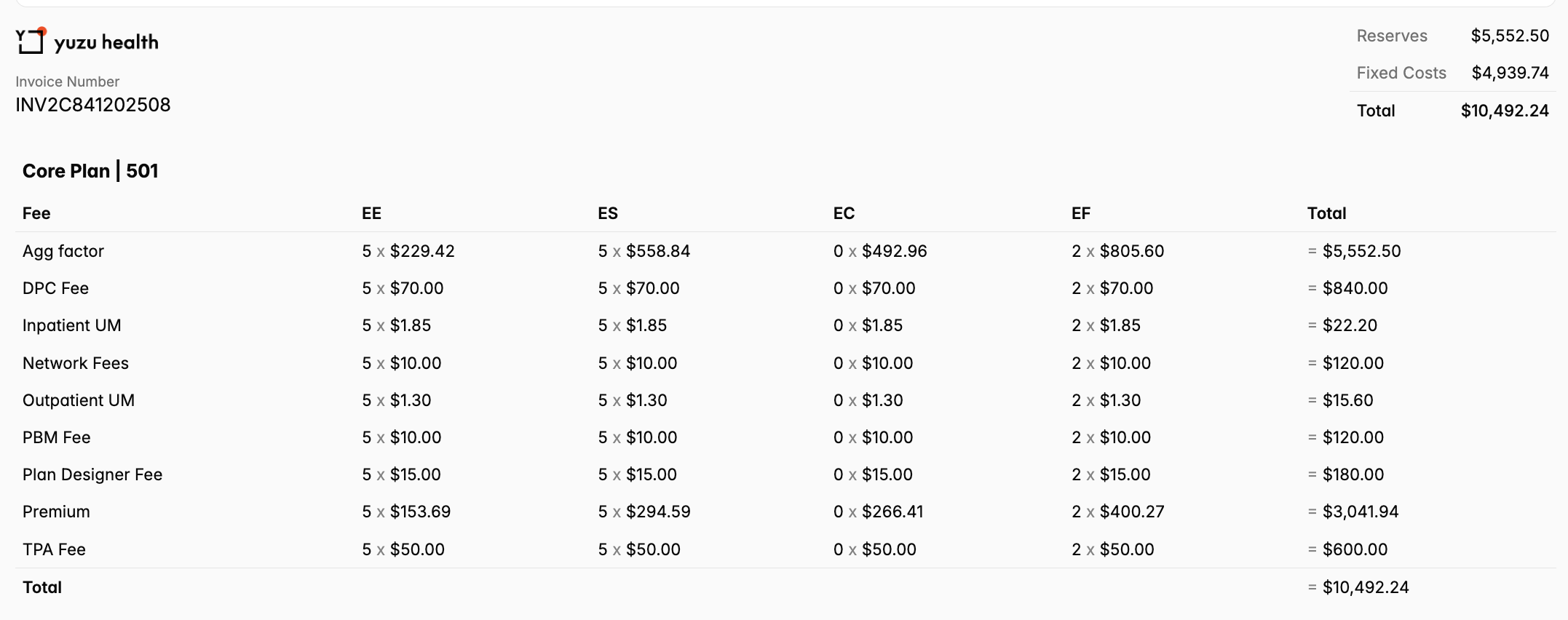
- A member removed to the plan decreases the enrollment in the tier for June’s invoice (i.e., in the invoice below, the EC tier is now 0, down from 1 EC in the previous period)
- But because the member was retroactively termed two months back (and therefore the associated money should not have been pulled and paid out), two months of fees (for June and May) are subtracted from the current invoice to cover the difference
- In the invoice this is represented by the (-2) in the EC tier; more detail is visible on the ‘Breakdown’ tab